Fashion and Apparel Fulfilment UK: What Makes Clothing Different, and What It Costs
03/10/2026 | Share:
Clothing is one of the hardest categories in e-commerce fulfilment to get right, and one of the easiest to get expensively wrong. A single style can exist as twenty separate SKUs once size and colour are factored in, returns rates regularly run higher than almost any other category, and seasonal buying means volume can triple in a matter of weeks. A fulfilment partner that has only ever handled simple, single-variant products will struggle with all three.
This guide covers what genuinely changes when fulfilment moves from a generic product to apparel, what a competent UK clothing fulfilment operation looks like, and what it costs in 2026. It reflects how the work is actually run inside a UK warehouse — Ogden Fulfilment has despatched goods from Yorkshire since the 1870s, in a region with deep roots in the textile trade.
Why apparel fulfilment is a different problem
Three things make clothing fulfilment structurally different from fulfilling most other product categories.
Variant complexity
A single garment style in five sizes and four colours is twenty SKUs, each needing its own stock location, barcode and count. Multiply that across a full range and a small apparel brand can easily be managing several hundred active SKUs — far more than a comparable brand selling, say, a single-variant skincare product.
Returns volume
Sizing uncertainty means apparel returns rates are consistently higher than most other categories, often well above 20% for online-only clothing brands. A fulfilment operation that treats returns as a minor afterthought will be overwhelmed by the volume, and slow returns processing directly delays getting sellable stock back on the shelf.
Seasonality and drops
Fashion brands frequently work in seasonal collections and timed product drops rather than steady, predictable demand. A launch can generate a spike in order volume that dwarfs a normal week, and a warehouse needs the staffing flexibility to absorb it without dispatch times slipping.
What a proper apparel fulfilment operation handles
Variant-level stock accuracy
Every size and colour combination needs to be tracked as its own stock record, with its own accurate count. A warehouse management system that only tracks stock at the style level, rather than the individual variant, will show a product as available when the specific size a customer wants has actually sold out.
Garment care in picking and packing
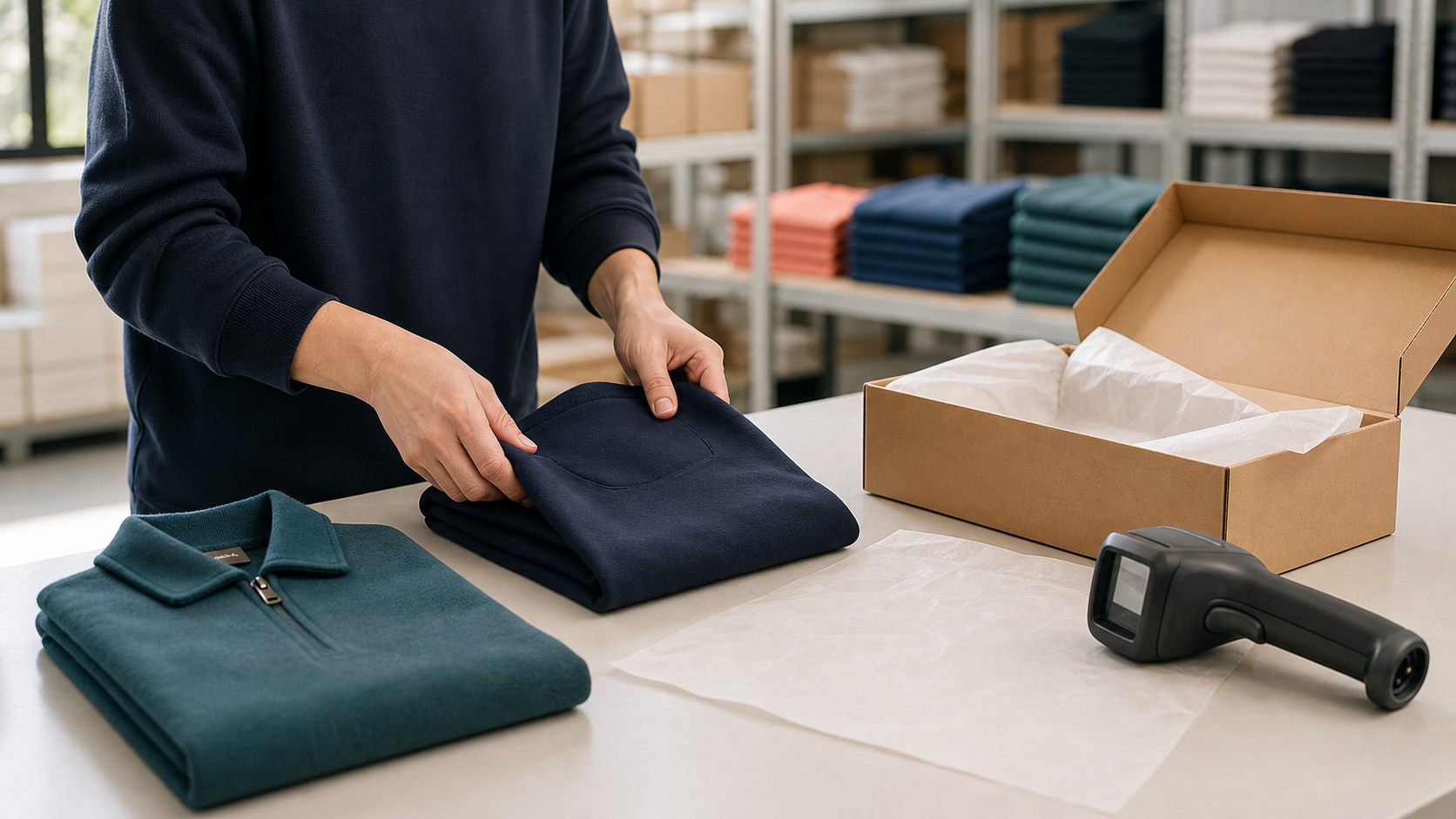
Folded or hung garments, tissue wrapping, branded polybags, and careful handling to avoid creasing or damage before the parcel is sealed are part of a proper apparel pack process, not an optional extra. For premium and mid-market fashion, presentation on unboxing is part of the product experience.
Fast, structured returns processing
Given the volume involved, apparel returns need a defined process: rapid receipt and inspection, a clear resaleable-versus-not decision, re-steaming or re-folding where needed, and quick restocking of resaleable items back into available inventory. A slow returns process for a category with a 20%+ return rate ties up meaningful capital in stock that is sitting in limbo rather than back on the virtual shelf.
Capacity for seasonal and drop-based demand
A partner used to fashion needs the staffing model and warehouse space to flex for collection launches and seasonal peaks (further detail in Ogden’s guide to peak season fulfilment), rather than running at a single steady-state capacity year-round.
What fashion and apparel fulfilment costs in the UK
Base pick and pack rates for apparel are broadly similar to other categories, but the total cost per order tends to run higher because of two factors specific to the category: multi-item orders are common, since customers frequently order multiple sizes to try at home, and returns processing costs are incurred far more often given the higher return rate. A realistic 2026 picture: standard pick and pack sits in the same £1.00 to £2.00 range as other categories for a single item, but average cost per order is higher once multi-size ordering and elevated returns volume are factored in. Returns processing for apparel typically costs £1.50 to £2.50 per return, and with return rates of 20% or more, that cost needs to be built into the overall margin model from the outset, not treated as a rounding error.
Choosing a fulfilment partner for a fashion brand
- Ask how their warehouse management system tracks stock at the size and colour level, not just the style level.
- Ask what their apparel-specific returns process actually involves — inspection standard, re-steaming or refolding, and typical turnaround time.
- Ask how they have handled seasonal spikes or collection launches for other clothing clients, and what their peak surge capacity looks like.
- Ask whether they can support branded packaging and presentation standards that suit a fashion unboxing experience.
- Ask for real cost-per-order numbers modelled against your actual return rate, not just a headline pick and pack price.
Frequently asked questions
Why are apparel return rates so much higher than other product categories?
Sizing uncertainty is the main driver — customers frequently order multiple sizes to try at home and return what doesn’t fit. Online-only clothing brands routinely see return rates of 20% or more, well above most other e-commerce categories.
How does a 3PL track stock for a clothing brand with many sizes and colours?
Each size and colour combination needs its own SKU and stock record inside the warehouse management system. Tracking stock only at the style level, rather than the individual variant, is a common cause of overselling sizes that have actually sold out.
What does apparel returns processing cost in the UK?
Returns processing for clothing typically costs £1.50 to £2.50 per return, covering receipt, inspection and restocking. Given apparel’s typically higher return rate, this cost needs to be factored into overall margin, not treated as incidental.
Can a fulfilment partner handle a seasonal fashion drop or collection launch?
A fulfilment partner experienced with apparel should have a staffing and capacity model that can flex for a launch spike, rather than running at one fixed capacity year-round. It’s worth asking directly how they have handled previous clients’ seasonal peaks.
Does apparel need special packing compared with other products?
Generally yes — garments are usually folded or hung with care, wrapped to prevent creasing, and packed in branded polybags or boxes where presentation matters to the brand. This adds a modest amount of pack time compared with a simple single-item product.